The Search for Thucydides
Lots of "atmosphere" but no joint statements or agreements coming from the China summit.

AlterNet: “The despised Trump is becoming even more despised and weak after his trip to China.”
President Donald Trump made a three-day state visit to China, the first visit by a sitting U.S. President to Beijing since 2017, meeting with President Xi Jinping at the Great Hall of the People on May 14.
The trip had a great deal at stake, as evidenced by Trump taking with him the heads of every major US industry he could think of, presumably to reach some kind of historic “grand bargain” with the ascendant sun rising in the East. From this angle, it looks like a big nothing-burger, at least for Trump. His weakness in making a grand bargain with China stems in large part from the U.S. not recognizing the emerging new world order (or disorder, see below) based on multipolarity rather than historic U.S. domination.
Both sides left with a few warm words and some vague commitments, but the summit was widely assessed as producing more atmosphere than architecture. Neither side made it clear about who was producing the gas, but we can guess.
Every concrete “deliverable” — Iran, soybeans, rare earths — appears only in the U.S. version of the meeting. Beijing’s readout does not confirm any of them. Chinese state media does not repeat them. And no independent reporting verifies them.
There were no joint, signed documents and no joint press release from the Trump–Xi summit, according to all available reporting.
Every credible source describing the meeting — including Deseret News and CBS News — emphasizes the same point: there were “few specific commitments and agreements” and “little has been said about any concrete agreements.”
China issued its own unilateral Foreign Ministry statement, and the U.S. offered its own unilateral readout, but there was no jointly negotiated text, no co‑signed communiqué, and no document outlining mutual commitments.
This absence is itself meaningful. Perhaps Xi agreed behind closed doors, not to publicly embarrass D.T.
* * *
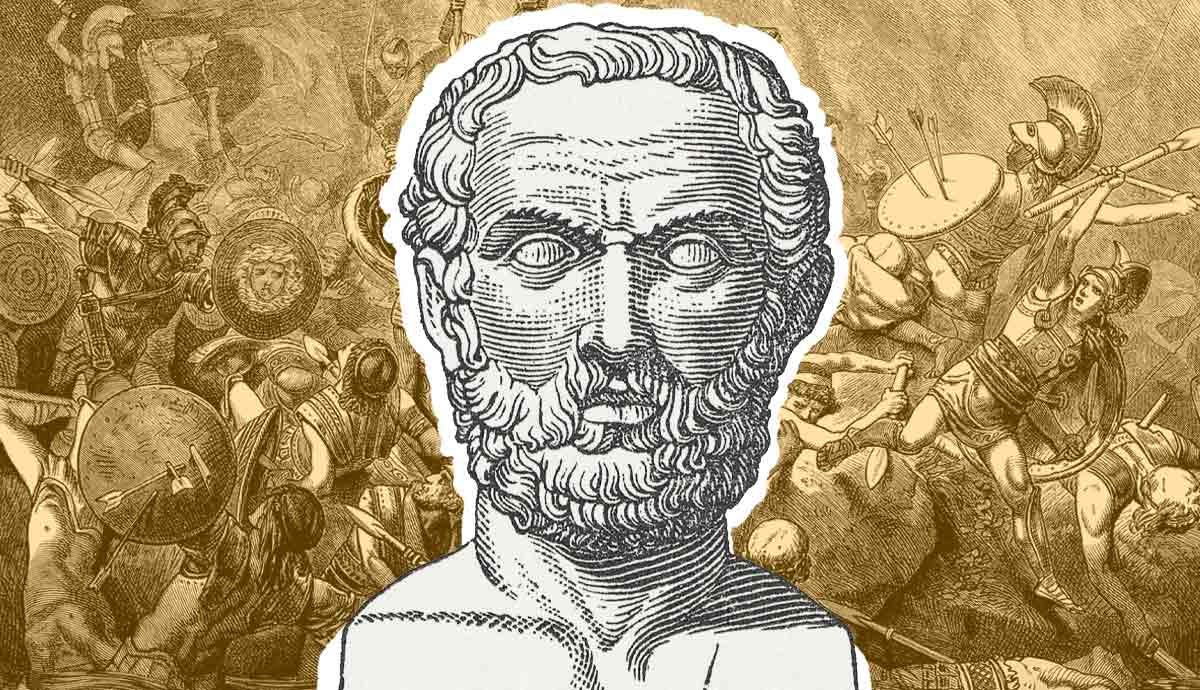
Searching for Thucydides.
China’s President Xi, in preparation for his meeting with Trump on Wednesday, said, “The world has come to a new crossroads. Can China and the U.S. overcome the ‘Thucydides Trap’ and create a new paradigm of major country relations?”
Trump’s team immediately went into panic mode and jumped onto Google (as many of us did) to find out who this guy — Thucydides — was.
Thucydides was born around 460 BCE in the Athenian deme of Halimous, fought in the Peloponnesian War, survived the plague, and spent 20 years in exile, during which he wrote his history. It covers the escalating struggle between Athens (a rising naval empire) and Sparta (an established land power) up to 411 BCE.
Thucydides is considered the father of “scientific history” for insisting on eyewitness testimony, cause‑and‑effect analysis, and a rejection of divine explanations. He is also foundational to political realism — the idea that states act from fear, interest, and power, not virtue
It sounds like Sid, and I might have found some common ground.
* * *
However, we don’t need Thucydides to explain the moment we’re in, marked by the growing threat of a new world war. Imperialism itself tells the story of a world completely divided among the big powers. The Thucydides Trap is just the classical‑Greek label for a much older, broader structural law of imperialism: when one great power rises and another declines, the system tends to generate war. President Xi was warning Trump that the contest between the big powers needs to be handled carefully, or else the threat of a third world war will grow even larger than it already is.
Upon first hearing Xi’s comment about a declining superpower, D.T. took it to mean that the U.S. was the one in decline (which it is). Word has it, he got so mad, he threw a shoe against the wall. But after his team of horrified advisors calmed him down, they scripted him the way that they always do: When in trouble, divert to Biden.
So he did:
“When President Xi very elegantly referred to the United States as perhaps being a declining nation, he was referring to the tremendous damage we suffered during the four years of Sleepy Joe Biden and the Biden Administration, and on that score, he was 100% correct.” — abcnews.com
I loved the 'Sid' reference!
Thanks, Mike,